
Five quality gates between a board and a customer
Reliability is not inspected in at the end — it is a production discipline. Every Towe driver passes computerized ICT, 100% full-load high-temperature aging, and (on waterproof families) hipot testing with void-verified potting. The result: a production pass rate above 99% and a field failure rate at or below 0.03%.
Every Towe LED driver passes computerized ICT in-circuit test on the board and 100% full-load high-temperature aging on the finished unit — no sampling. Waterproof families add hipot insulation testing and void-verified silicone potting. The process holds a production pass rate above 99% and a field failure rate at or below 0.03% across millions of shipped units, including a 5,000,000-unit volume series.
What is tested, and why that gate exists
Computerized ICT probes every assembled board — component values, placement, polarity and solder shorts — before the unit is ever powered. Defects hidden under components cannot reach aging, let alone a customer.
Every finished unit runs at rated power at elevated temperature on 10 aging racks. Not a sampling plan: 100% of production, on all three lines, on every batch. Waterproof units are aged fully sealed in their housings.
Every waterproof unit passes a high-pot insulation test after potting, verifying that the encapsulation and housing isolation meet the rating before the unit ships.
Air voids in potting become condensation pockets — the real-world cause of "waterproof" driver failures. Potting is dosed and verified so no void remains before sealing.
Output voltage, ripple and protection functions are verified at final QC, with the production pass rate held above 99%. The batch quality summary is available with every quotation.
Numbers you can put in a supplier file
| Production lines | 3 automated (SMT + wave soldering) |
|---|---|
| Aging racks | 10, full-load high-temperature |
| Aging coverage | 100% of units — no sampling |
| Production pass rate | Above 99% |
| Field failure rate | ≤ 0.03% |
| Fleet verification | 5M+ units (TF), 1M+ units (TN) |
| Certifications | CE, RoHS (copies on request) |
| Facility | 4,000 m², Zhongshan |
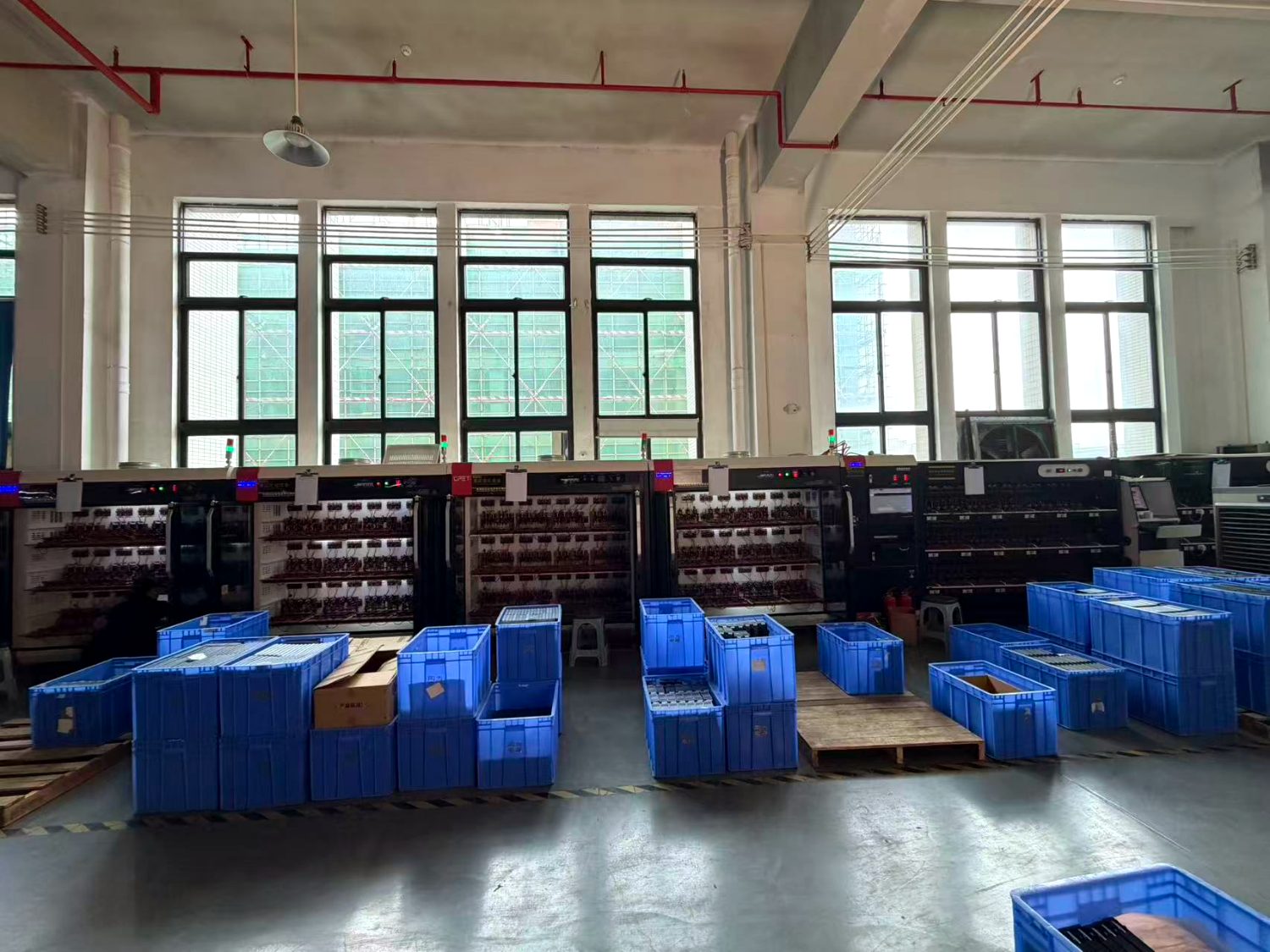
Failure rates, audits and certificates
What is your field failure rate?
At or below 0.03% across shipped volume, verified through the 5-million-unit TF series fleet and the 1-million-unit TN engineering fleet. The production pass rate at final QC is held above 99%.
Is aging done on every unit or on a sample?
On every unit. 100% full-load high-temperature aging on 10 aging racks — no sampling plan exists in the plant. This is the single biggest driver of the 0.03% field figure.
Which certifications cover the products?
CE certification and RoHS compliance cover the export families. Certificate copies with issuing details and validity dates are provided with quotations and for supplier qualification on request.
Can you support a supplier qualification audit?
Yes. Send the qualification checklist and we return the certificate copies, the quality summary, and answers to the technical questionnaire in one package. Factory audits and remote video tours are arranged through the sales team.
What happens if a unit fails aging?
It does not ship. Failed units are analysed for root cause — a marginal component lot triggers a batch review — and only units that pass every gate are packed.
Need our quality data for supplier qualification?
Send the qualification checklist and we will return the certificate copies, the quality summary and answers to the technical questionnaire in one package.